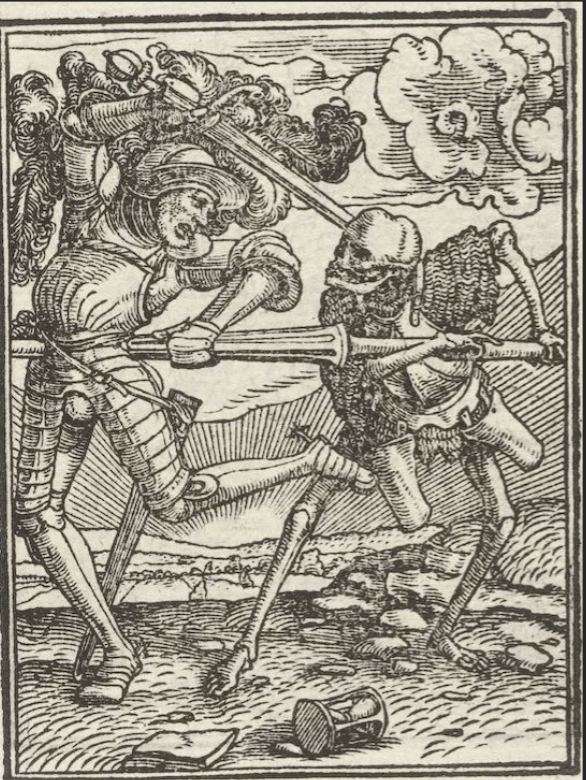
The Glorification of Death: A Common Fantasy Theme
Throughout the years that I have written and read fantasy, I have noticed one particular disturbing fact: The value of human life is completely ignored. Everything stems off of death. Writers seem to use it as their go-to answer for common writing problems. It’s used as a cheap way to make the reader feel sorry for characters they otherwise would not feel sorry for. It’s used to get rid of characters the writer realized they should not have put in the story in the first place. In other words, it is often used as a lazy way out. In the first part of Glorified Death, I cover some ways I’ve seen multiple writers use death to answer common fantasy story conundrums, I point out the problems with those answers, and I give some advice on how to answer those questions without death.
Question One: How Do I Start My Hero On Their Adventure?
Any writer of fantasy has inevitably asked this question. And that’s okay. It’s a natural question to ask in a story, and it doesn’t mean that you are a bad writer. It just means you’re writing a story. It’s how you answer it that can be problematic.
Common Answer: Kill off everyone that keeps them home.
Example: Our hero is a simple young person (male or female), usually a farmer’s child or something like that. Not precisely the sort of person who can easily go on an adventure. They have a protector who will protect them, make sure they are safe, and keep them from going on our adventure, which in the end ‘keeps our hero from growing.’ And we can’t have that. So, we kill off the protector, and pull our hero into the adventure because they have nothing else to lose!
Problem With Death Answer: Firstly, it leaves our hero unprotected, automatically throwing us into having to ask question two, and leaving us with the consequent problems of that. Secondly, it plants a seed into the reader’s mind that makes them think that everyone who is protecting them is getting in their way, preventing them from ‘going on their adventure.’ This automatically makes parents, guardians, and those who are responsible for the safety and welfare of others (especially young people) look like the enemy, by keeping them back from ‘being who they’re meant to be.’
Possible Answers: This one is a difficult one to answer, because in truth there are many ways to solve that problem. One answer is that our hero goes of their own free will, to stop the enemy not because they are forced to, but because it is the right thing. (This is shown in the Lord of The Rings books.) Another answer, which is a little more commonly used, is they are pulled into it because someone they care about is threatened in some way. Whether the loved one is kidnapped, blackmailed, disappears, and so on. There are many other possibilities, because a fantasy story does not have to follow the lines of the story we are talking about. There are hundreds of possible fantasy story ideas. This is just one of them.
Question Two: How Do I Keep My Hero From Dying?
This question in itself is not a bad question. If you have any enemy who is intent on killing your hero, this is a question that will come up, and very quickly.
Common Answer: They learn how to kill people.
Example: Our hero has to come across someone who is both devoted to the same cause as our hero is, and can kill the bad guys before they kill him. Since we do not want our hero to die, and we have killed off our hero’s other protectors, we provide this character so that they can protect our hero and teach our hero how to protect themselves.
Problem With Death Answer: The problem comes when we force our hero to learn to fight because we have killed off everyone who would have protected them. Killing off our hero’s protectors naturally means that our hero has to fend for themselves against the enemy’s hordes. And, our hero has to survive. Which means they have to be a particular kind of person (a fighting prodigy, brave, daring, physically sound, quick-minded, fearless.) But this narrows the possibilities for our hero’s character, personality, and problems. They can’t be physically weak, or realistically, they’re dead. They can’t be squeamish. They can’t have any moral questions such as, ‘Is it right to kill this person?’ ‘Do I have to kill this person?’ which would make them pause. They can’t really have any problems with fear, otherwise they will either freeze or run, and then they’re dead before they have time to learn to stand their ground.
Possible Answers: Our hero learning to defend themselves is perfectly fine. It’s a good thing. So learning to fight is not a problem, and it’s a definite way to keep our hero from dying. But, depending on who our hero is, it doesn’t have to be the only way to keep our hero from dying. If we have protectors for our hero, we have broader possibilities for who our hero can be.
Question Three: What Is the Foremost Important Thing My Hero Needs To Learn?
Common Answer: How to fight (kill people)
Example: Our story is an action-packed story, which usually means there is no character development through moral growth. That takes too long, and trying to make our hero seem like a real person is far too hard. So, we give them a flaw which can easily be answered through real experience. Flaws such as phobias, naïveté, or self-doubt can be ‘solved’ through experience rather than wisdom. And the most exciting ‘real experience’ our hero can have that will make them learn exceptionally quickly, is fighting and killing other people (the bad guys, generally).
Problem With Death Answer: This cannot answer your reader’s real-life problems. Unless you are trying to say your reader can answer all their problems by killing anybody who stands in their way, and that through learning to do so, they can learn to ‘believe in themselves’ or overcome all their fears. Fighting does not make our hero good! It doesn’t make them kind, or compassionate, or wise. Using combat as the thing which improves our hero’s moral, emotional and mental standing doesn’t work. Unfortunately, fighting is usually the answer in a story because the hero is not a person. They’re just a caricature, and trying to teach a caricature moral principles is about as easy as reasoning with your breakfast. A caricature is an inanimate object. Your reader is a human being. Everything our hero learns is learned by the reader. If you have a flat hero, the reader gains nothing.
Possible Answers: Learning to fight can be important, depending on who our hero is. But learning to fight is not the foremost thing our hero needs to learn, if our hero has been made right. If we give our hero moral problems that they can learn to fight against, it shows what we believe is good and right, and it shows our readers how they can fight against their own troubles. It also encourages them. Giving your hero one, or even several, moral problems automatically opens the field for what they can learn. Whether it is love, self-control, patience, gentleness, or something else.
Question Four: How Do I Show Achievement In My Hero?
Life is a road. The older you get, the harder and more dangerous it gets. If you learn to make the best of it (if you improve), it doesn’t make the road any smoother or less dangerous. It just means that you can deal with it. In the same way, if you don’t learn, it still doesn’t make the road smoother or less dangerous. It just makes you susceptible to them. It’s the same with our story. Our hero has to improve, otherwise they will die. And one of the ways to show improvement is achievement.
Common Answer: They kill someone.
Example: Our hero has learned how to kill, because that is the most important thing in they can learn, and because we can’t have them dying in the middle of our story. Now, we need to show what our hero has achieved, to show that they have actually gotten somewhere in all their learning. So we put them against their first enemy, whom they kill, usually without any side effects (such as panic, an adrenaline rush, vomiting, or horror).
Problem with Death Answer: This encourages the idea that killing is an achievement. Even desired. Killing is not an achievement. It’s a consequence of someone’s bad choices. It is sometimes a necessity, because we live in a fallen world. Another problem that often comes with the death answer is, realistically our hero would be throwing up all over themselves and other people. Anyone who has butchered animals knows the feeling that comes with it. How much more would that feeling be after you killed a human being! This lack of effect on our hero gives the reader the wrong perspective of death. It makes death look like an easy, unaffecting thing, and makes it look like it’s not a serious problem. But death is the result of our fallen world. It’s never normal. It’s never unaffecting. It’s never easy.
Possible Answers: If you have given your hero a moral problem which they struggle against, and are learning to fight, one way to show achievement is by forcing them up against that problem, and showing the reader how they overcome it.
Question Five: Oops! I Have A Character Who Is Important, but Not Really Important. What Do I Do?
If you are at all like me, then you love making characters and putting them in stories. Unfortunately, it’s very easy to put too many in the same story. But you really want them to be in there, so you put them in anyway, and give them an important job. But then… They don’t come in again. You can’t make them a main or recurring character. So… What do you do?
Common Answer: Kill them off.
Example: By this time we have put in several characters who have one important task in the whole book, and never come in again. But we have given them names and (somewhat) personalities, so we can’t in good conscience have them drop off the face of the earth. Without telling the reader. So, we kill them. It’s easy and simple, there is no doubt in the reader’s mind, and no thoughts like, “I kind of like that character. I wish he came in more. What happened to him?”
Problem with Death Answer: Firstly, it makes people expendable. Anything portrayed in a story has to be applicable to real life, otherwise it is meaningless, and we might as well not tell the story. Killing off a slew of people because we don’t know what else to do with them encourages the reader to think in a similar manner. Perhaps not with killing, but it certainly can lead to thoughts like, “He’s not important to my life, so I can ignore him.” or “She doesn’t have anything else to give me, so I’ll act like she doesn’t exist.” or “I’ll use them until they don’t give me anything, then I can ditch them.” Secondly, from a writing perspective, it is a lazy way the writer can get out of doing hard work.
Possible Answers: If a character is not important enough to come in again, don’t write them in the first place! One, because having too many characters confuses the reader and clutters up your story. And two, because if killing off these characters can encourage readers to think in the wrong way, it’s best just to try and find a way so the character doesn’t have to come in at all. Is it harder? Yes! But if you value ease over a good story, you should not write.
Bonus Question: I really like this character and I want him in a book, but he can’t fit in the one I’m working on! What do I do?
Bonus Answer: Put them in a different book!
Question Six: There Is A Character Who Keeps My Hero From Really Shining. What Do I Do?
There are many times when this question, to a certain extent, appears in your story. It might not even happen with your hero. In my own story, I found that one of the main side characters could only improve when his mentor (the main character, by the way) was not there. Not because his mentor prevented him from improving, but because the next step for that character to take was to do it on his own, of his own free will and by his own decision. But how? This question has to be answered. We want our hero (or other characters) to improve, so that we can encourage our reader, showing them that our readers can improve, they can change, they can become better than they are.
Common Answer: Kill off the character to let our hero step into their place.
Example: Our hero’s mentor is the best warrior besides our hero. And because of that, he gets in the way of our hero’s story, very much like our hero’s first protector. And we know what we did with that one. Our hero can’t precisely shine with that kind of competition. So, we find some way to kill off the mentor. But we don’t want it to be that obvious, because simply killing him off doesn’t quite do him justice. So we make him die a heroic death.
Problem with death answer: Firstly, it encourages the idea that the only way to succeed is if you are the best. No one can be equal or better than you, or you are a failure. And if someone is better than you, they are in your way, and must be gotten rid of in order for you to become better. The second problem, is that it permanently removes this wiser, more skilled character from our hero’s life, making it impossible for our hero to have any relapses or doubts (which realistically they would have,) because there is now no one else they can turn to if they ever get in trouble. This makes this step ‘the final step to perfection’ for our hero. Because if they fall, they have no one to pick them up… Unless we want to introduce another character to be our hero’s mentor (of sorts) just to make up for the fact that we killed off the previous one. Which, if that’s the case… why not keep the previous mentor in the first place?
Possible Answers: One way to answer question six without death is to simply separate the two characters for a time. The death answer does this easily, yes, but it also does it permanently and encourages other bad ideas, as mentioned above. Whether the mentor tells our hero (or other character) that it is time for them to step out on their own, or some accident or trouble separates them, forcing our hero to improve or fail, these ways are better answers than death, and are more realistic and relatable for our reader.
Question Seven: How Do I Get My Hero To Prove Themselves And Become The Hero?
What is a hero? According to Noah Webster’s Dictionary, a hero is ‘A man of distinguished valor, intrepidity or enterprise in danger.’ or ‘a great, illustrious or extraordinary person.’ Generally in a fantasy story we use the word ‘hero’ as a synonym for ‘main character.’ But the hero is the one who, generally, everyone in the story recognizes as ‘one of distinguished valor.’ They are generally the one who ‘saves the day.’ But how?
Common Answer: They kill the big bad guy
Example: After a brilliant career as a soldier, our hero has soared above any other fighter, including his mentor. And usually within the space of a year. They have killed every other important and unimportant enemy, and now the only one they have left is the big bad guy. That is all that separates them from heroism and being recorded in legend and song as a true warrior, a true hero, a true ‘good person.’
Problem with death answer: There’s no problem with our hero killing the main bad guy. Nine times out of ten, it has to be done, because the bad guy will not stop killing and destroying until they are dead. But when we realize that killing is not an achievement — it’s a consequence, and at times a necessity — we come to realize that the killing of the bad guy is not proof of much of anything. Our hero’s friend, the ‘rebel’ army, or the bad guy’s second in command could do it just as easily. The only thing the killing of the bad guy does is show how brave our hero is. But braver means nothing. Anyone can be brave. It doesn’t mean that they’re good.
Possible Answers: Our hero can prove themselves in many ways besides killing the enemy. If we have given our hero a moral problem, one way for our hero to ‘prove themselves’ (show that they have reached the final goal of the story) is by putting them up against their biggest temptation yet. This biggest temptation can and most often should be given by the main bad guy (this is why this particular antagonist is the main antagonist.) Our hero faces the temptation, and gets past it. This is an encouragement to the reader, and shows true growth and determination in our hero. As for becoming ‘the hero,’ it’s not really important. Becoming ‘the hero’ might even give our reader the idea that if they overcome their problems, they will be noticed and honored by others. Which is not usually true. But if you want your hero to become ‘the hero,’ one way to do it is they become ‘the hero’ to a much smaller group of people. Perhaps even just one person. And the most important person for whom your hero becomes ‘the hero,’ is your reader.
Conclusion
Death is abundant in fantasy stories, and is often overused as a lazy way to answer questions that every writer encounters. But it is not a good answer. It influences your reader to think from the wrong perspective, fills your story with unnecessary bloodshed, and eventually gets in the way of writing a unique and relatable story. But be encouraged! There are lots of other answers to your questions! They take more effort and time, but in the end, they are worth it! If you want to share the truth with your reader, and encourage, inspire and exhort them through your stories, death is not your answer.
Next…
If death is not the answer to these common questions, and gives the reader the wrong perspective… Is it wrong to have death in your story? In my next article I will do my best to answer this question, and will give some examples where death can be used in an effective way, and where it might even be necessary.
Until then, keep writing, keep learning, and keep growing.
 gwynna.c
Leave a comment