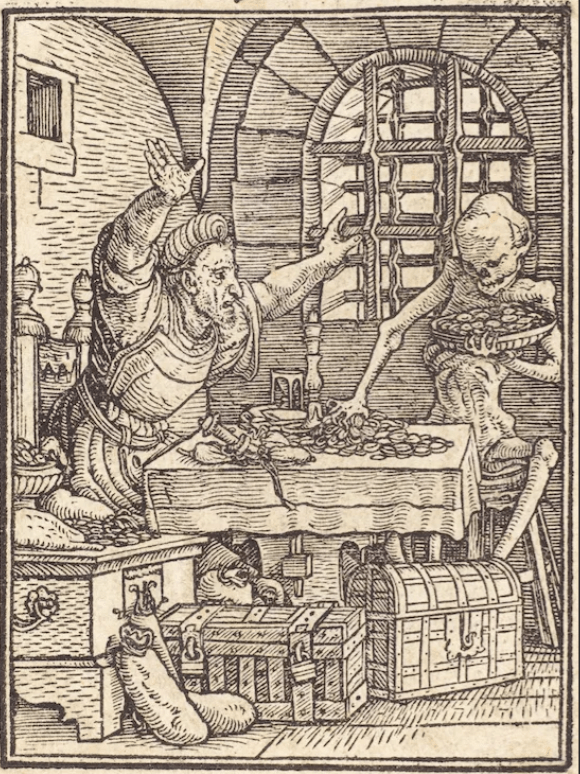
A Writer Can Use Death To Make Their Story Effective
Last time, I talked about the way many writers use death as an answer to all of their writing problems. I explained the problems with this, and brought up several other possible answers that solved the problems but did not use death. Then the question came: Can a writer use death at all? If using death to answer questions is wrong, then where does death come in, if it comes in anywhere? In this article, I will do my best to answer this question, and give some examples where death can be used in a story. I will also bring up some mistaken interpretations of these ‘death answers’ that might seem to be accurate, but in truth are not. Then I will give some things to think about. These questions are for both writers and readers, to help them figure out whether or not death has been used properly in the story.
The Most Important Question: Why?
A character should not die unless there is a reason for it. A reason beyond the writer’s own comfort or ease. It has to be a meaningful reason. The writer has to think about the death scene before they write, to make sure that it is necessary to the story, and that it will not get across any wrong ideas to the reader. This is not an easy thing to do. The main question to ask is this: Why would this person die? One thing to always keep in mind, is that most people value their own lives. The average human being will avoid death as much as they possibly can. That’s why we look both ways before we cross the road. Why we don’t stick our finger in the light socket. Why we don’t jump into a circle of sharks. Even good people will avoid death. A good parent will watch their own life as well as their child’s. They’re better help to their child alive. But they will sacrifice their own lives for their child’s, if the situation calls for it.
Ways To Use Death: Why Would This Person Die?
Answer One: Sacrifice – To Save Others From Death
‘Greater love has no one than this, that someone lay down his life for his friends.’ – John 15:13
We’ve seen this before in stories. A character sacrifices themselves for others, even if it means death. It can be done for several reasons, and can be very effective. Firstly, this willing sacrifice is the character’s own decision. This is important. If the writer has done a good job making the character, all of the character’s choices are the character’s choices, and are often completely outside the writer’s control. This shows that not only is the decision up to the character, but it also shows that the character values human life. And through showing how and why the character values life, it teaches the reader how and why they can and should value it. Sacrifice inspires the reader. It drives them toward making sacrifices of their own for others. Now, not necessarily with their life, but with other things, whether it’s their time, their effort or their thoughts.
How It can Be Used Effectively:
Redemption – Sacrifice is often used as a way to redeem a traitor. You’ve seen this before. One of the ‘good guys’ betrays their friends, for one reason or another. But then, they realize what they have done, and come back. Usually, they sacrifice themselves for the good cause. They redeem themselves by this utterly selfless act. When used correctly, this is both joyful and sad. Joyful because it shows that the traitor has turned, and has been redeemed. Sad, because it took their death to redeem them.
Protection – Another way to use sacrifice is protection. This character dies for someone, to save them. They don’t have to risk their life, they don’t need to prove themselves. They risk their life just because it’s right.
Love – Another way to use sacrifice is to show love, once and for all. There is no greater way of showing love than dying for someone else. While it is tied to Protection, it can also be used in its own unique way. If someone doubts the love of their parent, and their parent dies for them, how can they doubt their love any longer? In a way, it is a kind of redemption.
Mistaken Interpretation: Going Out With A Bang
We’ve seen this before, too. The heroic or previously treacherous character selflessly gives his or her life to save the main character, often from the main character’s own stupid decisions, though that’s not always the case. Now this might seem like redemption, protection or love. And it can be very difficult to tell the difference between the real and the fake. But if you look deeply into it, you come to realize it actually falls into question five or question six, which we covered in the last article, Glorified Death Part I. Namely, it ‘solves’ the question of what do to with either an unnecessary character, or someone who gets in the main character’s way. Often it’s used as an emotional way to get a character out of the story. They sacrifice themselves ‘for the good cause!’ And because the writer can’t figure out what to do with them.
How Can You Tell The Difference?
Generally, the rest of the story will give you a good hint. If the rest of the story follows typical/stereotypical storylines and characters, more likely than not, these ‘sacrifice scenes’ are a mistaken interpretation. Another hint that it is mistaken is if the scene feels disjointed or abrupt, or if the actions leading up to it are unnecessary. For instance, if in the story someone suddenly attacks someone else (usually an important character, and usually for no great reason), and the sacrificer in question suddenly gets in the way and gets killed, this could be an indication that it is more of a, ‘how can I make this character go out with a bang,’ than ‘this is the great sacrifice, to redeem/protect/show love.’
Things To Think About:
- Why did they do such a drastic reaction?
- Would they really give their lives for this person?
- Why was the intended victim in danger in the first place?
- What does this sacrifice teach?
Answer Two: Justice – To Mete Out Justice To The Evildoer
This is most often seen in mystery stories. The murderer is found out, and is executed. This is death through justice. Justice can also be done on an individual scale. Robin Hood was not part of the law, though he was a lord before he became an outlaw. But he took the responsibility of doing the just and right thing, because the law had been twisted by tyrants.
How It Can Be Used Effectively:
Poetic Justice – Poetic justice can be used in stories with surprising effect. But it can also be overused, and so you have to be careful. Poetic justice, in this case, is when the enemy dies in a manner that is more than just getting killed. The most common form of poetic justice is that the enemy has brought it upon themselves in a roundabout way. If they create a robot that is designed to kill, and the robot kills them, this can be poetic justice. If they destroy and kill in one particular way, then are killed in that particular way, this can be poetic justice. It can be an effective way to show the reader that Someone greater than the mortals has seen the enemy’s evil, and has brought their own evil back on them.
Fake ‘Justice’ – Justice can be used in the good side’s favor. But it can also be used in the enemy’s favor. Twisted courts and juries, tyrants, and blood-thirsty officers, using unjust circumstances as an excuse to further their ends, usually by weakening the good side to gain power. This has been done many times before in our history, and many times before in stories. It can be an effective way to show the reader the true evil of the enemy. But only if it makes sense!
Mistaken Interpretation: I Will Have My Revenge!
This mistaken interpretation is a little different than the others, in that it happens a lot in real life. People do kill others out of revenge, while deluding themselves that it is justice. The problem comes if the writer acts like it is justice. This is shown in more stories than you would think, but you’ve seen it before. A certain person or group of people have been horribly wronged by someone else. They take vengeance on that person by killing them. They are found out, and… they get away with it. Has this happened? Yes. Is it a good principle? No. Now, there is such a thing as mercy and forgiveness. And sometimes there are situations where no one can punish the people who took revenge in the name of justice. But it still doesn’t make what they did right, and if the writer gets across the idea that it is right, then they are telling the reader that there is nothing wrong with the reader killing others because of the evil done to themselves. That is wrong.
How Can You Tell The Difference?
It’s pretty easy to tell the difference between justice and revenge. And it’s not law vs the individual. Anyone can be just. In stories like Robin Hood, the individual can be more just than the law. But a thing done in anger is not justice, no matter who does it. If it is done out of malice, spite, hatred, getting back at someone, or ridding yourself of a ‘pest,’ it’s not justice.
Things To Think About:
- Was this killing necessary for justice to be done?
- Was this action premeditated, done out of impulse, or a realization that it had to be done?
- Was this killing right? If not, did the writer appear to support it?
Answer Three: Self-Defense – To Protect Yourself And Others
Sometimes a character has to kill to protect themselves and those around them. It can be easier to write death through self-defense, because the actions of the enemy necessitate that the good side retaliate with deadly force. Self-defense can be done on either an individual or a national scale. If a family is attacked, they have every right to defend themselves. That means fighting, and even killing. If a nation is invaded, it has every right to defend itself. That means going to war, if peace cannot be made. While killing through self-defense might not be an exceptionally inspiring way of using death, it is realistic. If you use it right.
The Exception – Now, not every situation of self-defense results in death, and the writer has to be aware of this. The family can fight back so the attacker runs. It’s a little different on a national scale, most often some people will die. But the besieged nation can intimidate or harass the invaders so that the invader leaves before anyone is killed.
Mistaken Interpretation: The best defense is a good offense!
Self-defense is not ‘you get them before they get you.’ We talked about the family and national situation above. But let’s go from the perspective of ‘get it before it gets you.’ The family feels threatened, and attacks to avoid potential danger before a real threat is carried out. This is not self-defense. If a nation invades another nation because they think the other nation might attack them at some point, this is not self-defense. It is just a plain attack, and that makes them the aggressor.
How Can You Tell The Difference?
If the writer treats war like a free pass to kill as many as you can before they get you, or as a way for the main character to heroically get rid of all of the bad guys, they obviously are not using it as a meaningful use of self-defense.
Things To Think About:
- Would the enemy fight to the death?
- How many people have to die?
- Did anyone try to avoid this situation before making so drastic a decision?
- Does it make sense that this situation happened in the first place?
Answer Four: Self-Imposed – Suicide
Some antagonists would rather destroy their own lives than have them destroyed by someone they despise, whether that someone is an officer or representative of legal justice, or our hero.
How It Can Be Used:
I Am In Control: Sometimes an antagonist will take their own life in the attempt show to themselves and everyone else that they are still in control of something ‘grand.’ They might take their life to show even God himself that ‘they have complete control over their own lives.’
Show Them: An antagonist might also take his/her own life to force the hero to either feel sorry for them, or to attempt to save them. This is another show of control on the antagonist’s part. In their mind, they are making the hero do something against everything that ‘makes sense.’ In spite of all their conflicts, the hero will still ‘come to the rescue’ even for someone like the antagonist. This, of course, is ignorant of the fact that the hero does not save or attempt to save a life because that life deserves to be saved. They do it because it is right. The antagonist, however, may only see the hero’s goodness as weakness or something societally acceptable. And for some antagonists, knowing that they ‘made the hero do something against the hero’s will’ is reward enough for taking their own life.
Mistaken Interpretation: The Bad Guy Has To Die!
In most cases, this is an accurate assessment. There are a few exceptions, but for the most part, the main antagonist has to die in the story. However, if it does not make sense for the antagonist to kill themselves, but the only possible way for the enemy to die is by killing himself, or it is the grandest way for them to ‘go out with a bang’… a mistake has been made somewhere. Something has been overlooked, ignored, or forgotten. If you have found yourself in this situation as a writer, it is better to go back and rewrite rather than make the antagonist do something that does not make sense for them to do.
How Can You Tell The Difference?
If the death happened abruptly and either with excess emotion or not enough, the writer is either trying to justify the action that really doesn’t make sense, or get it over with, and hope the reader doesn’t notice. But the biggest sign of mistaken interpretation is, if it is against the antagonist’s personality to take their own life.
Things To Think About:
- Is this antagonist the sort of person who would take his own life?
- Was his suicide properly provoked?
- Was there anything else he could do before making such a drastic decision?
Answer Five: Evil
Evil people will destroy everything that stands in their way. And if other people stand in their way, they will destroy them, in whatever manner they deem necessary. Sometimes, that means death. Now, not every antagonist will take this path at first. Some might try persuasion, whether reasoning or threats or something else. The style of persuasion depends on the antagonists. Other antagonists might simply skip the persuasion step and jump right into killing. It all depends on who the antagonist is. And the writer should know who they are.
How It Can Be Used:
A Immovable Object: Some antagonists may take the killing path if they see a severe threat. Especially if that threat cannot be gotten rid of in any other way. For example, Moriarty was perfectly fine with ignoring Holmes, until Holmes became a nuisance. Then what was Moriarty’s next option? Killing? Actually not. His next action was to try and persuade Holmes to step aside. It was when Holmes refused to quit, that Moriarty resorted to killing.
Making An Example: Some antagonists might take the path of killing not because they enjoy it, or because the one they kill is an ‘immovable object,’ but because they want to show others, for one reason or another, the consequences of rebellion. Often this stems from a hidden fear. Tyrants and warlords have done this in history for millennia. Pharaoh feared the Hebrews would take over Egypt. So he had all the baby boys killed.
Sacrifice: This is a different type of sacrifice than what I talked about before. This sacrifice is sacrifice to a deity. Some antagonists might be cultic fanatics, and want something that they believe can only be given them by blood sacrifice. This has been done in history forever. But not all antagonists are like this.
Pleasure: Then, of course, there are some antagonists who simply enjoy killing. Whether it’s because of the feeling it gets them, or as some kind of retribution, or something else. Serial killers are an example. However, not all antagonists are like this. As a writer, you should know your characters better than anyone else.
Mistaken Interpretation: Evil = Kill, Kill, Kill!
Evil people do destroy, yes. Evil people do kill, yes. But it makes a rare evil person who will automatically turn to killing to solve all of their problems. One reason is that once you kill someone, it turns the heads of everyone else. An evil person who wants to stay out of sight will try everything they can to avoid being seen. Sometimes, that means they will avoid killing. Not because they don’t want to kill, but because they can’t afford it. Another reason is that the person they want to kill is more powerful than they are, or unreachable in one way or another. An evil person will not kill if they have something to lose by it. There are actually a lot of things an evil person will not do if they have something to lose by it. The one who answers all their problems by killing has nothing to lose by killing everyone in their way. Usually, this means that they have power, and a lot of it. Enough that no one can rise up and destroy them.
How Can You Tell The Difference?
This always boils down to who the antagonist is, and why they do what they do. Two opposing signs of mistaken interpretation are one: if in most scenes the antagonist is a homicidal maniac, then they conveniently spare the main character for no other reason than that the main character can’t die. Or two: if in most scenes the antagonist is not a killer, then suddenly decides to kill someone for no other reason than the writer really needs that someone out of the way. If you can’t figure out why the antagonist is killing people, and the only answer is, ‘well… they are.’ that is a sign of mistaken interpretation.
Things To Think About:
- Why would the antagonist resort to killing?
- Does the rest of the antagonist’s personality match with their bloodlust (or lack thereof?)
Answer Six: Oh! – A Writer Realizes That It Would Happen
I have found that for my own writing, the death of a character is most often unplanned. For the antagonists, I usually have a better idea of the way they are going to die, if they’re going to die at all. But for other characters, the death is a sudden jolt that I did not see coming. But sometimes, I realize that it would happen.
Example: In my first book, The Last Captain Sails Again, I have a side character who does not come in much. He is important, but not a main character. I had no intention of him dying. As a matter of fact, I really liked him, and I wanted him to live. But there came a point when I suddenly realized that he would die. He didn’t have to die. It wasn’t a ‘plot necessity. But he was the kind of man who would fight to the death, even when he was surrounded by enemies. He had no chance of getting out alive if he fought. As a matter of fact, he had a better opportunity to get out alive if he didn’t fight. But this is a situation where the character has more authority than the writer. I could make him live, but only if I kept him from doing what he would have done. If he did not fight, he would have shown that he was not willing to risk his life to save the lives of the people he loves. And that was just not who he was. He would never have stood by and let others die. And so, I couldn’t either. Even if it mean that he would die.
Mistaken Interpretation: Well, It’s Necessary For The Story…
The phrase ‘necessary for the story’ can have a few different meanings, and the confusion comes because of the word ‘necessary.’ You might say, ‘Well, necessary just means needed.’ Yes, that’s true. But needed for whom? If something is truly necessary, it should be necessary for the reader, necessary for the characters, necessary for the story. Not necessary for the plot. Necessary for the plot simply means that you have to get rid of this particular character to keep the current storyline. That is unnecessary death. Necessary for the story means it would happen. It is necessary, because forcing it to be anything else destroys the story, just like forcing my character not to fight would destroy his character, not only through being completely uncharacteristic, but also through destroying everything that I tried to teach the reader and main character through him. Namely bravery and self-sacrifice.
How Can You Tell The Difference?
As a writer, you should never find yourself saying, “I had to do it! The story wouldn’t work if this character still lived!” This is an indication that you have written yourself into a corner, and the ‘only way’ to get out of it and still keep your writing is to kill someone. As a reader, if it feels disjointed or abrupt, this can be a sign that the writer did it for the plot. If the scene is either overly descriptive (the writer’s attempt to make you feel sorry for the character so they can justify killing them off) or severely lacking description (they want to get it over as quickly as possible), it can also be a sign of an unnecessary death.
Things To Think About:
- What would this character really do under this circumstance?
- Did this really have to happen?
Bonus Answer: Tragic Accident
Accidents do happen. There are many examples of it in real life. Someone is killed by another person accidentally, most often because of carelessness on the killer’s side. Someone’s mistake/bad choices brings about their own death. Or something happens that no one could stop or even avoid, like natural catastrophes. Since these things do happen, the question a writer should ask before they use this answer is, does it make sense that the person got into the situation where they were killed? You don’t generally have a rabid teetotaler driving off a bridge because they were drunk. You don’t generally have a stay-at-home person getting killed by an avalanche in the arctic. And even if a character is prone to getting drunk, will they drive while they are inebriated? Some will, some won’t. As a writer, you need to know what sort of person they are. Even an adventurous person won’t travel on a mountainside they know is prone to avalanches, because they know the danger. People who have nothing else to lose might, but then again, they might not. You know your characters better than anyone else.
Conclusion
Death can be used effectively in a story, and in many ways. But there can be mistaken interpretations that may seem like the right ways, but really are not. And it can take some perception and knowledge to tell the difference between the two. But an important thing for both writers and readers to keep in mind is this: If it feels wrong, it is. And always remember, that most human beings, even excessively good or excessively bad, will not die (if they can help it) without a very good reason!
I hope this article has shed some light on how to use death properly. And until my next article comes out, keep writing, keep learning, and keep growing.
 gwynna.c
Leave a comment